Showing posts with label children's non-fiction. Show all posts

Friday, March 1, 2019

A Writer's Bookshelves


I love books!

This is a bookshelf that sits next to my computer. It has my reference books in it and some of my favorite middle grade books.


For 8 years I wrote a column for kids and I also like writing historical fiction.

My middle grade book (which means it is geared toward 8-12 year olds - but baby boomers love it, too, because they were young when this story takes place) Duck and Cover, is a historical fiction novel. It takes place in the fall of 1962 during the Cuban Missile Crisis.
 
Here are some more reference type books that I have on my shelves that I have found to be very helpful in my writing.


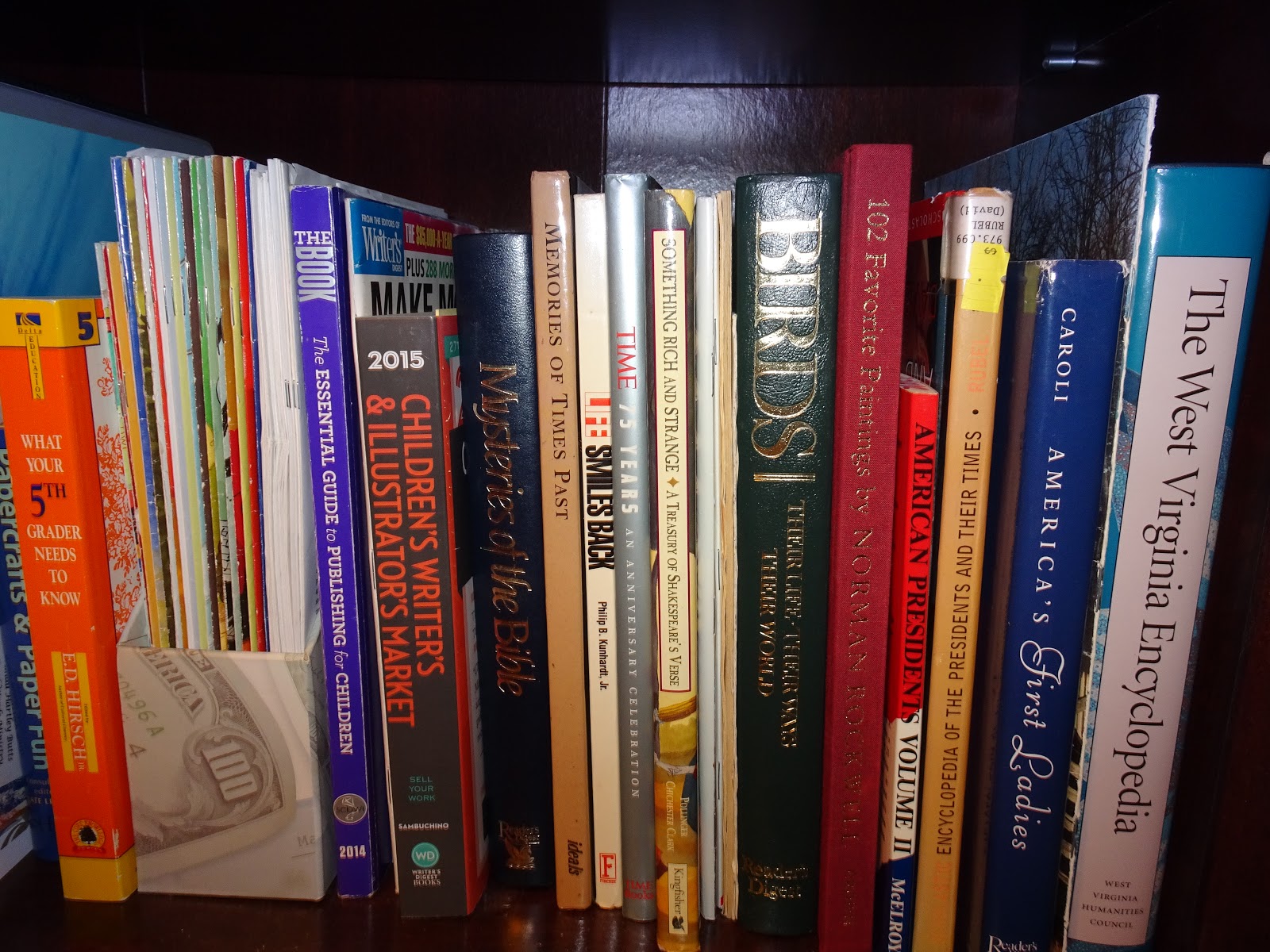


Of course, this is only the tip of the iceberg. I have 3 other bookcases in our family room. They are filled with numerous other books, including picture books, chapter books, vintage books, copies of Two Lane Livin' (the magazine I wrote a children's column in). etc. etc.

Oh, I can't leave out a pic of this old floor-model radio which was converted into a bookcase. I bought this at a yard sale for $3. It is filled with Little Golden Books!


Do you have lots of books, too?
If you like, tell us about them in your comment.
Or better yet, do a blog post about them and come back and put a link to it in your comment - I'd love to see them.


Happy Writing


Friday, April 5, 2013

Writing Non Fiction


I always think I don't have any more books in me.
But, it never fails, when the one I am  working on is finished and has been sent out, another idea comes to me.

I have had two inspirations since finishing my last MG. One is an idea for another MG story, the other is writing a non-fiction children's book.

I have been doing a little research on how to make non-fiction interesting, fun and publishable.

Here are a few things I have discovered:

Make it as exciting as fiction. How?
Brainstorm!
Find subjects that grab a reader's attention.
Ask yourself - Is it a good story? Will it interest your readers?
Find a hook! Choose a theme and develop it.
Narrow your topic. Focus on your subject.
Unearth new information about a topic.
Find unusual details and quirky facts.

Ask questions that haven't been asked before.
Give specific details.

Every word should be true.  Find trusted sources, such as a diary, a letter, oral history, interviews, old newspapers, photographs and catalogs.
If you don't know exactly what they did or said, let your readers know that by using words such as perhaps, maybe or I think.

Do extensive  research.

Bring your readers into the story.

Revise.

What can you add to my list?

If we brainstorm, we could help each other come up with some great ideas!


Posted byJanet Smart   on Creative Writing in the Blackberry Patch.